 Court Crowd
How to run a pickleball round robin
Pick a format, lock your roster, match the number of rounds to your court time, agree on scoring and tiebreakers before the first game, then let a generator do the matchups.
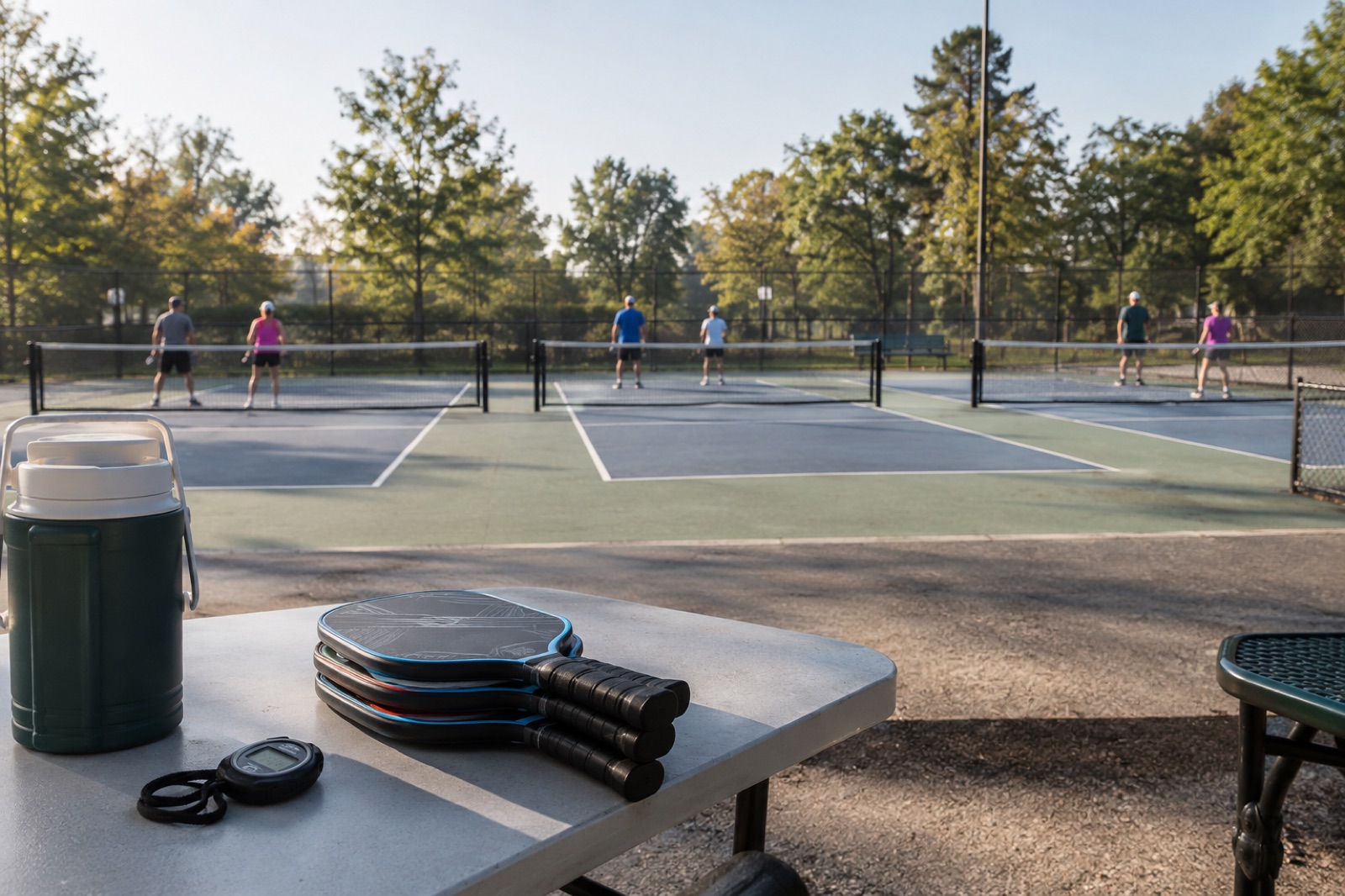
Pick a format and a headcount
Start with how many people you expect. Four players is the minimum, and eight to 24 is a comfortable range for one event.
If you are new to the idea, our pickleball round robin format, explained covers how partners rotate. For 20 or more players, formats like Up and Down the River or Gauntlet manage court flow better than a full rotation.
Collect sign-ups and lock the roster
Share one link or message where people sign up, and ask for a skill level so you can split groups if you need to.
- Keep a waitlist. Two to four names is enough to cover no-shows.
- Lock the roster the day before. About 24 hours ahead works, and a reminder the night before helps.
- Decide the no-show rule now. Write it down so nobody is surprised.
Match courts and rounds to your time
Everyone plays at once, so courts follow headcount. Eight players need two courts, 12 need three and 16 need four.
- 8 players, 2 courts: 7 rounds gets everyone together with everyone, about 90 minutes.
- 12 players, 3 courts: 5 or 6 rounds, about 90 to 120 minutes.
- 16 players, 4 courts: about 5 rounds, around 90 minutes with 12 minute caps.
Book a little more court time than the math says. A two hour window comfortably holds six or seven rounds. Not sure where to play? See how to find pickleball courts near you or browse pickleball courts by city.
Find a game near you
Court Crowd is free. See nearby courts and who is going and when, so you can find a spot for your group or a session to join.


Set scoring and tiebreakers
Choose before play starts and say it out loud at a short player meeting. Two common options:
- Total points: every point counts, so an 11 to 7 game banks 11 for the winner and 7 for the other side. Ties are rare.
- Win and loss record: simpler to track, but it ignores the margin.
For games, one game to 11 with rally scoring keeps rounds under 12 minutes. Capping each game at 10 to 12 minutes keeps every court on one clock, which matters most with bigger groups.
For ties, pick head-to-head, point differential or a quick tiebreaker game, and announce which one up front.
Run the day, not the spreadsheet
Working out matchups, byes and repeat partners by hand is the part that eats your morning. Our free Round Robin Pickleball tool sets up the matchups, tracks live scores and names a champion at the end.
Courts are also easier to fill when people can see who is going. The Court Crowd app features show nearby courts and who is going and when.
- Before: confirm the courts, send the reminder, bring a timer and spare balls.
- During: call each round start and stop, then enter scores.
- After: announce the winner and ask who wants to do it again.
How many players do I need for a round robin?
Four is the minimum, since that fills one court. Eight to 24 players works well for a rotating-partner event, and bigger groups are easier to run in pools.
How long should each game be?
Capping games at 10 to 12 minutes keeps every court on the same clock. Uncapped games to 11 can run 15 to 20 minutes.
What do I do when someone does not show up?
Bring in someone from your waitlist if you have one. Otherwise adjust the rotation, and decide in advance how missing players are handled.
Can I run one with an odd number of players?
Yes. A few players sit out each round, and a good schedule rotates those byes so everyone plays about the same amount.
Keep reading
- Pickleball round robin format, explained
- How to find people to play pickleball with
- How to find pickleball courts near me
- Pickleball courts by city
- Round Robin Pickleball, our free round robin tool
- All pickleball guides
Find a game near you
Court Crowd is free. See nearby courts and who is going and when, so you can walk into a session that is already on.